
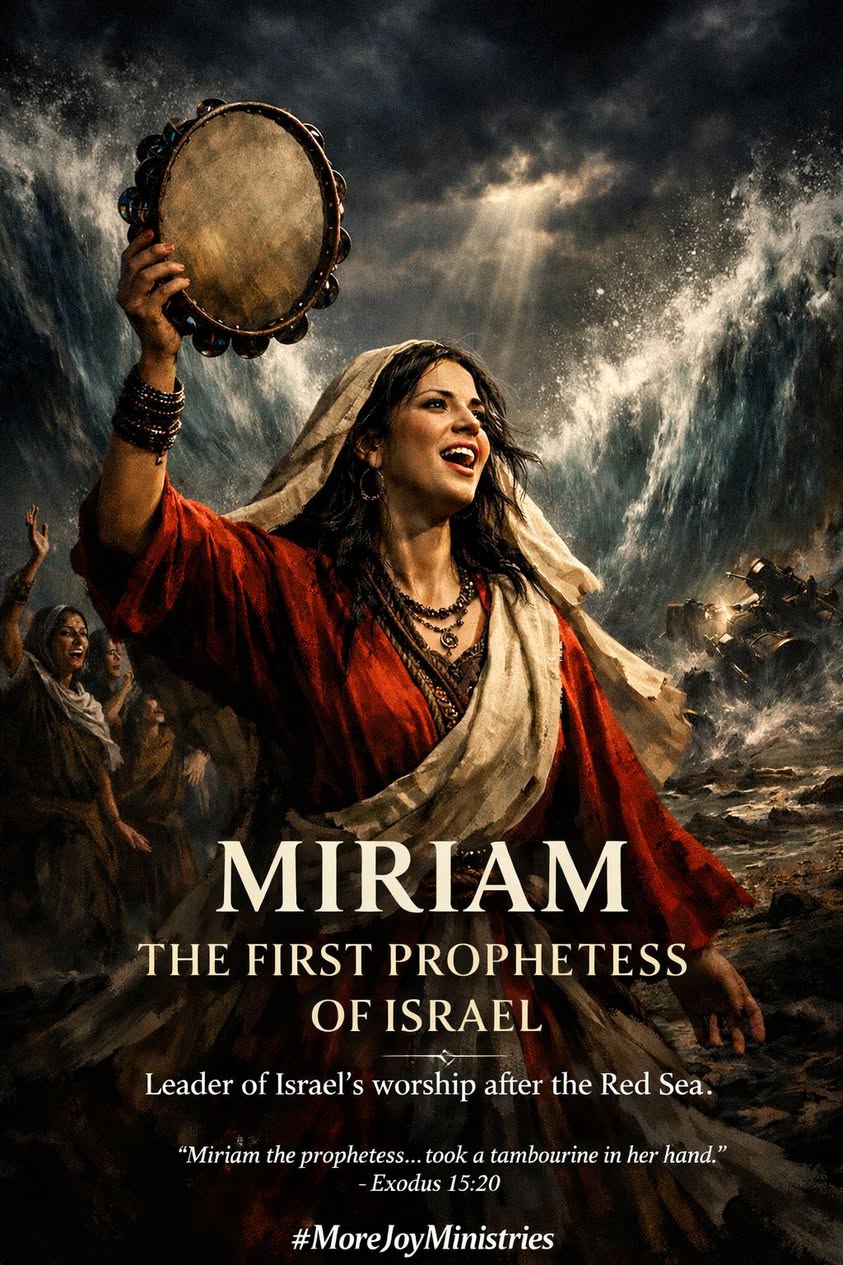
Tony Campbell added a new photo to the album: People Of The Bible.
People Of The BibleMIRIAM: (PROPHETESS OF ISRAEL) Miriam is one of the most important women in the Old Testament, yet she is often overlooked when people talk about the leadership of the Exodus. Scri
People Of The BibleMIRIAM: (PROPHETESS OF ISRAEL)
Miriam is one of the most important women in the Old Testament, yet she is often overlooked when people talk about the leadership of the Exodus. Scripture actually places her among the leaders God used to bring Israel out of Egypt.
The first time we see Miriam is in Exodus 2.
Pharaoh had ordered the death of Hebrew baby boys. Moses’ mother hides him for three months and then places him in a basket among the reeds of the Nile.
Miriam stands nearby watching to see what will happen.
When Pharaoh’s daughter discovers the child, Miriam steps forward and asks if she should find a Hebrew woman to nurse the baby. Pharaoh’s daughter agrees, and Miriam runs to bring their own mother.
Because of Miriam’s quick thinking, Moses is raised by his own mother during his earliest years before eventually entering Pharaoh’s household.
The next time Miriam appears is after the Red Sea crossing.
Exodus 15:20–21 says:
“Aaron’s sister Miriam the prophetess took a tambourine in her hand, and all the women went out after her with tambourines and dancing. And Miriam answered them, Sing to the Lord, for He has triumphed gloriously; The horse and its rider He has thrown into the sea.”
Notice how she is described.
Miriam the prophetess.
The Hebrew word is נְבִיאָה (neviah), the feminine form of נָבִיא (navi) meaning prophet. She is the first woman in Scripture called a prophetess.
She is also clearly functioning as a leader. The text says all the women followed her as she led them in praise after the Red Sea deliverance.
Another verse confirms her role in Israel’s leadership.
Micah 6:4
“I sent before you Moses, Aaron, and Miriam.”
God Himself names Miriam alongside Moses and Aaron as leaders during the Exodus.
However, her story also includes a serious warning.
In Numbers 12, Miriam and Aaron speak against Moses because of his Cushite wife. But the deeper issue appears in what they say next:
“Has the Lord indeed spoken only through Moses? Has He not spoken through us also?”
This becomes a challenge to Moses’ authority.
God responds immediately. He calls the three of them to the tent of meeting and publicly defends Moses as His chosen servant. Miriam is struck with leprosy as judgment.
Aaron pleads with Moses, and Moses intercedes for her.
She is healed, but she must remain outside the camp for seven days before returning.
The final mention of Miriam appears in Numbers 20:1.
After nearly forty years in the wilderness, Miriam dies and is buried at Kadesh.
Her life spans the entire Exodus generation.
She witnessed the oppression in Egypt, the birth of Moses, the Red Sea deliverance, and the forty years of wandering in the wilderness.
Scripture presents Miriam as a courageous sister, a prophetess, and a leader among the people of Israel. But her story also reminds us that even strong leaders must guard their hearts against pride and rivalry.
God used Moses, Aaron, and Miriam together to guide Israel during one of the most dramatic moments in biblical history.
#MoreJoyMinistriesMIRIAM: (PROPHETESS OF ISRAEL) Miriam is one of the most important women in the Old Testament, yet she is often overlooked when people talk about the leadership of the Exodus. Scripture actually places her among the leaders God used to bring Israel out of Egypt. The first time we see Miriam is in Exodus 2. Pharaoh had ordered the death of Hebrew baby boys. Moses’ mother hides him for three months and then places him in a basket among the reeds of the Nile. Miriam stands nearby watching to see what will happen. When Pharaoh’s daughter discovers the child, Miriam steps forward and asks if she should find a Hebrew woman to nurse the baby. Pharaoh’s daughter agrees, and Miriam runs to bring their own mother. Because of Miriam’s quick thinking, Moses is raised by his own mother during his earliest years before eventually entering Pharaoh’s household. The next time Miriam appears is after the Red Sea crossing. Exodus 15:20–21 says: “Aaron’s sister Miriam the prophetess took a tambourine in her hand, and all the women went out after her with tambourines and dancing. And Miriam answered them, Sing to the Lord, for He has triumphed gloriously; The horse and its rider He has thrown into the sea.” Notice how she is described. Miriam the prophetess. The Hebrew word is נְבִיאָה (neviah), the feminine form of נָבִיא (navi) meaning prophet. She is the first woman in Scripture called a prophetess. She is also clearly functioning as a leader. The text says all the women followed her as she led them in praise after the Red Sea deliverance. Another verse confirms her role in Israel’s leadership. Micah 6:4 “I sent before you Moses, Aaron, and Miriam.” God Himself names Miriam alongside Moses and Aaron as leaders during the Exodus. However, her story also includes a serious warning. In Numbers 12, Miriam and Aaron speak against Moses because of his Cushite wife. But the deeper issue appea