
Tony Campbell added a new photo to the album: Expound - Exploratory Studies.
Expound - Exploratory StudiesZECHARIAH 5:5–11 (THE VISION OF THE EPHAH) Zechariah 5 contains two connected visions. The first is the flying scroll (5:1–4), which announces covenant judgment against
Expound - Exploratory StudiesZECHARIAH 5:5–11
(THE VISION OF THE EPHAH)
Zechariah 5 contains two connected visions. The first is the flying scroll (5:1–4), which announces covenant judgment against individual sins such as theft and false swearing. The second vision (5:5–11) shifts the focus from personal transgression to something broader and more structured.
In verse 5, the interpreting angel tells Zechariah to “lift up your eyes.” This recurring phrase in Zechariah signals a new stage of revelation. The prophet then sees an ephah going forth.
An ephah was a standard unit of dry measurement used in commerce, roughly equivalent to several gallons. Because it was associated with trade and economic exchange, the object immediately carries commercial significance. The vision is not about private moral failure alone; it involves systems connected to buying, selling, and measurement.
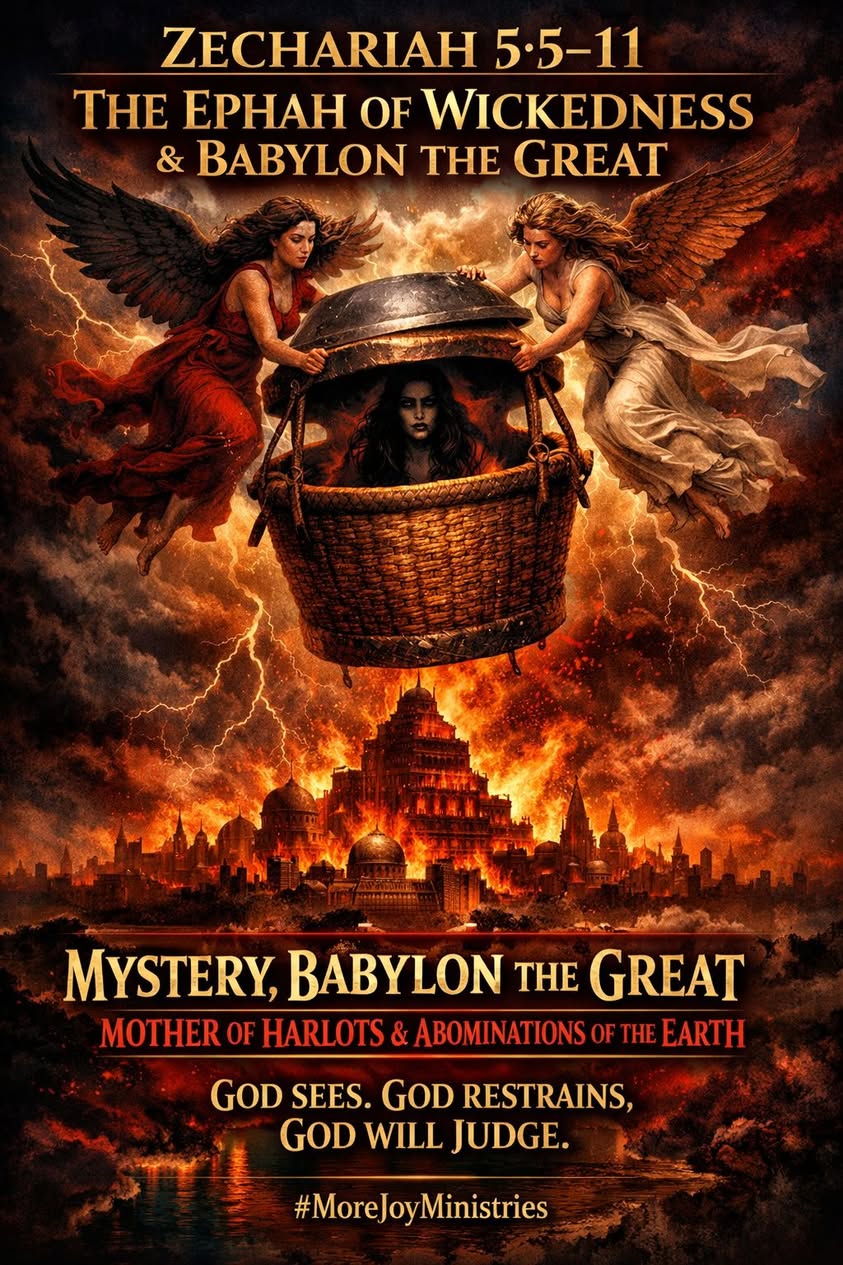
Inside the ephah is a woman. The angel identifies her directly: “This is wickedness.” The Hebrew term is רִשְׁעָה (rish‘ah), which refers to moral guilt, injustice, and lawlessness deserving judgment. Wickedness here is personified, not to suggest literal embodiment, but to represent a corporate moral reality.
A heavy “talent of lead” is then placed over the opening of the basket. A talent was a substantial weight, commonly estimated at around seventy-five pounds or more. The imagery emphasizes forceful containment. Wickedness is not portrayed as sovereign or uncontrolled; it is restrained under divine authority.
Two women with wings then lift the ephah and transport it to the land of Shinar, where a “house” will be built for it. Shinar is an early biblical name for Babylon. It first appears in Genesis 11 in connection with the Tower of Babel, a narrative that describes organized human rebellion against God. Later, Babylon becomes the head of Gentile imperial power in Daniel 2 and reappears symbolically in Revelation 17–18 as the center of a final global religious and economic system opposed to God.
The relocation of wickedness to Shinar is significant. Rather than being immediately destroyed, it is centralized and established in a defined location. The text states that a house will be built for it, and it will be set there upon its base. This suggests institutionalization and structure rather than random diffusion.
The vision therefore moves from individual sin (the flying scroll) to systemic wickedness (the ephah). The commercial container, the personification of wickedness, and the association with Babylon all point toward organized, structural rebellion expressed through economic and societal systems.
Theologically, the passage communicates several important truths. First, God not only judges personal sin but also addresses corrupt structures. Second, wickedness operates within limits set by divine sovereignty; it is contained and directed, not autonomous. Third, Babylon functions as a recurring biblical symbol of centralized human rebellion, connecting Genesis, the prophetic books, Daniel’s vision of Gentile dominion, and the apocalyptic imagery of Revelation.
Zechariah 5 does not present isolated symbolism. It participates in a larger canonical pattern in which Babylon represents organized opposition to God that ultimately comes under judgment. The passage contributes to that trajectory by depicting the consolidation of wickedness within a defined system that God oversees and, in the broader biblical narrative, will eventually judge.
#MoreJoyMinistriesZECHARIAH 5:5–11 (THE VISION OF THE EPHAH) Zechariah 5 contains two connected visions. The first is the flying scroll (5:1–4), which announces covenant judgment against individual sins such as theft and false swearing. The second vision (5:5–11) shifts the focus from personal transgression to something broader and more structured. In verse 5, the interpreting angel tells Zechariah to “lift up your eyes.” This recurring phrase in Zechariah signals a new stage of revelation. The prophet then sees an ephah going forth. An ephah was a standard unit of dry measurement used in commerce, roughly equivalent to several gallons. Because it was associated with trade and economic exchange, the object immediately carries commercial significance. The vision is not about private moral failure alone; it involves systems connected to buying, selling, and measurement. Inside the ephah is a woman. The angel identifies her directly: “This is wickedness.” The Hebrew term is רִשְׁעָה (rish‘ah), which refers to moral guilt, injustice, and lawlessness deserving judgment. Wickedness here is personified, not to suggest literal embodiment, but to represent a corporate moral reality. A heavy “talent of lead” is then placed over the opening of the basket. A talent was a substantial weight, commonly estimated at around seventy-five pounds or more. The imagery emphasizes forceful containment. Wickedness is not portrayed as sovereign or uncontrolled; it is restrained under divine authority.